Tenant Screening in Dudley: Full Checklist
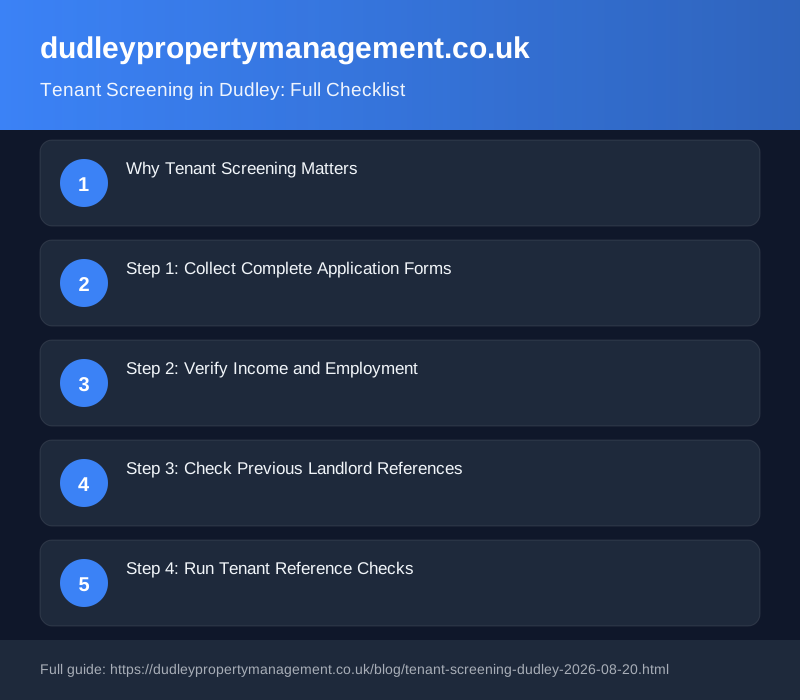
Poor tenant selection costs landlords an average of £3,000 per problem letting in missed rent, damage, and legal fees. Thorough tenant screening isn't optional—it's the foundation of successful property management in Dudley. This checklist walks you through every step to identify reliable tenants, check references properly, and avoid costly evictions.
Why Tenant Screening Matters
Dudley's rental market moves fast. With high demand for properties, landlords can feel pressure to let units quickly without proper vetting. The reality: a single bad tenant—one who defaults on rent, causes damage, or requires eviction—can set you back months and thousands of pounds.
Effective screening isn't just about asking questions. It's about verifying answers, spotting inconsistencies, and making informed decisions based on evidence. Legal protections exist (covered under the Equality Act 2010), so your screening process must be fair, documented, and applied consistently to all applicants.
Step 1: Collect Complete Application Forms
Start with a professional application form that asks for:
- Full legal name, date of birth, and current address
- Employment history (last 5 years, employer contact details)
- Current salary or income (payslips, bank statements)
- References from previous landlords (at least two)
- Professional reference (employer or manager)
- Emergency contact
- Reason for moving/leaving previous property
- Any pets, dependants, or other household members
Make it clear that false information will result in immediate rejection. Honest applicants expect thorough screening and won't mind the process.
Step 2: Verify Income and Employment
Most screening failures happen because landlords skip income verification. The rule of thumb: rent should not exceed 30% of gross household income.
- Employed tenants: Request the last three payslips, a recent P60, and contact details for their employer. Call to confirm employment, job title, and start date—don't rely on email.
- Self-employed: Ask for two years of tax returns, accountant reference, and recent business bank statements.
- Benefits or pensions: Request award letters from the Department for Work and Pensions or pension provider.
- Guarantors: If income is borderline, ask for a guarantor. They must provide the same income verification and sign a formal guarantor agreement.
Never accept promises or verbal confirmations. Falsified payslips are common, so spot-check with employers directly.
Step 3: Check Previous Landlord References
This is where you'll spot problem tenants. Previous landlords are usually honest because they want problem tenants out. Contact them directly—not via email or contact details the tenant provided.
Ask specific questions:
- Did the tenant pay rent on time, every time?
- Were there any complaints from neighbours?
- Did they maintain the property well?
- Why did they leave?
- Would you let to them again?
Red flags: vague references, long delays in responding, or statements like "they were fine" with no detail. Get references in writing where possible.
Step 4: Run Tenant Reference Checks
Professional tenant referencing services add a layer of verification that self-checking can't provide. Tenant referencing software can cross-check credit history, previous address verification, and identity confirmation—all within legal boundaries. Many Dudley letting agents use these tools as standard.
Key checks to include:
- Credit check: Shows payment history and debts (though bad credit alone isn't grounds for rejection)
- Right to Rent: Verify they have legal UK residency and permission to work
- County Court Judgments: Check for unpaid debts or civil actions
- Eviction history: Search for previous evictions—a strong predictor of future problems
Step 5: Verify ID and Address
Proof of identity and address prevents fraud. Ask for:
- Passport or photocard driving licence
- Proof of current address (utility bill, council tax bill, or bank statement dated within the last three months)
Inconsistencies here warrant rejection. If a tenant can't provide basic documentation, it's a red flag.
Legal Note: Under the Equality Act 2010, you cannot reject applicants based on age, disability, race, religion, gender, or sexual orientation. Your screening criteria must be objective and applied equally to all applicants. Document everything.
Red Flags During Screening
Watch for these warning signs:
- Frequent moves: More than one house per year may indicate instability or eviction history
- Vague employment: Jobs that are hard to verify or seem too good to be true
- Inflated income: Income claims that don't match tax returns or payslips
- No previous landlord: A tenant with no reference history requires extra scrutiny
- Communication issues: Late replies, evasiveness, or inconsistent stories
- Pressure to decide quickly: Legitimate tenants don't rush you; desperate ones do
- Refused credit checks: Legitimate applicants accept standard verification
Making the Final Decision
Score applicants consistently. A simple system: pass, conditional pass (with guarantor), or fail. Document your reasoning for every decision. If you reject a tenant, be prepared to explain your objective reasons if challenged.
Dudley property managers who invest time in proper screening report 40% fewer void periods and significantly lower losses from defaults or damage. The upfront effort saves money and stress later.
Tools and Resources
Several platforms streamline tenant screening. Professional reference checking services integrate with application management and provide automated reports. Many also offer landlord insurance options that cover rent guarantee and legal defence—worth considering alongside your screening process.
FAQ
Can I reject a tenant because of bad credit?
Bad credit alone isn't sufficient grounds for rejection—you must show a clear link between their credit history and rental risk. However, a pattern of missed payments, CCJs, or evictions is relevant. Always document your reasoning objectively.
What if a tenant refuses referencing checks?
You can reject the application. Professional referencing is standard practice, and any legitimate tenant should accept it. Refusal is typically a red flag.
How long should I keep screening records?
Keep all screening documentation for the duration of the tenancy plus six years. This protects you in case of disputes or eviction proceedings.
Do I need a guarantor for all tenants?
No, but if a tenant's income is borderline (approaching 30% of rent) or employment is precarious, a guarantor is sensible. Ask for a UK-based guarantor who can provide income verification.
Can I use family or friends as references?
Family references are less valuable and easy to falsify. Always prioritise previous landlord and professional references. If a tenant has no previous landlord, ask an employer instead.
Related Products
Tenant Screening Software
Automated reference checking, credit reports, and eviction history verification—all in one platform. Essential for scaling your lettings.
Browse on Amazon UKLandlord Insurance
Rent guarantee and legal defence insurance cover missed rent and eviction costs. Pairs perfectly with thorough screening.
View OptionsProperty Management Forms Bundle
Professional application forms, guarantor agreements, and reference templates compliant with UK lettings law.
Shop NowAffiliate Disclosure: This article contains affiliate links to Amazon UK products. We earn a small commission at no extra cost to you if you purchase through these links. We only recommend products we believe are genuinely useful for property managers.